
Boiled Rice vs Raw Rice: Which One Belongs in Your Kitchen?

Every kitchen has its rice story.
Some of us grew up on the firm, slightly chewy boiled rice that never sticks together. Others swear by the soft, fluffy comfort of raw rice that melts into perfect curd rice or pongal.
As a chef, I’ve cooked with both in countless recipes, and I can tell you — it’s not just a matter of taste. The way these two types of rice are processed makes a real difference in nutrition, texture, and even how your body digests them.
So, let’s break it down simply.
What Exactly Is Boiled Rice?
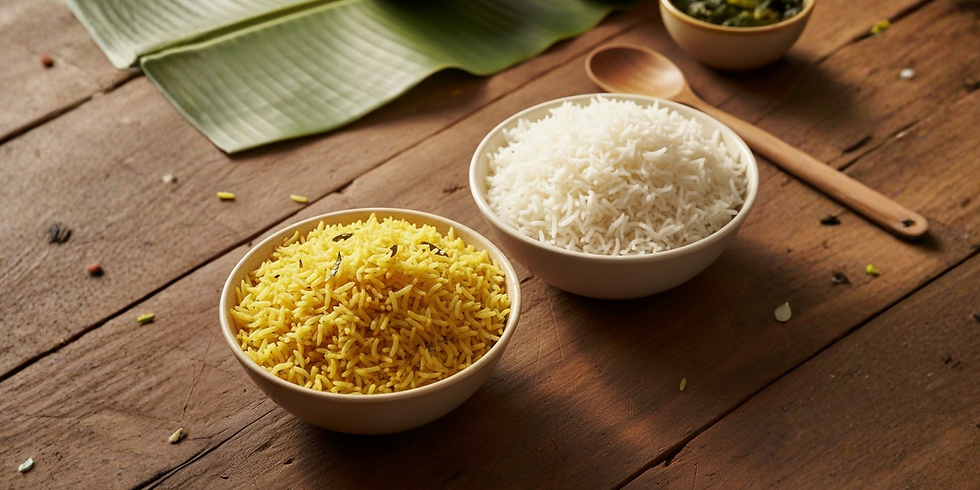
Boiled rice (or parboiled rice) is paddy that’s partially boiled before milling. The grains are soaked, steamed, and dried with their husk still on. This traditional process pushes nutrients from the outer bran layer into the kernel — so even after polishing, the rice holds onto more vitamins and minerals.
You’ll notice boiled rice is slightly yellowish, and when cooked, the grains stay firm and separate. It’s great for meals where you want defined grains — like South Indian thalis, biryani or meals with gravies and curries.
What About Raw Rice?
Raw rice skips that soaking and steaming step. The paddy is dried and milled directly, giving it a whiter color and a softer texture.
It cooks faster and tends to clump a little, which makes it ideal for dishes like pongal, curd rice or kheer — the kind of food that’s meant to comfort.
The Nutritional Difference
Feature | Boiled Rice | Raw Rice |
Nutrients | Retains more due to parboiling | Loses some during milling |
Fiber | Slightly higher | Lower |
Glycemic Index | Lower – slower sugar release | Higher – quicker sugar spike |
Shelf Life | Longer | Shorter |
Why Many Prefer Boiled Rice
🥦 More nutrients – parboiling preserves key vitamins and minerals
💪 Better for diabetics – slower digestion and steady energy
🍛 Non-sticky texture – perfect for sambar, rasam or biryani
🏡 Longer shelf life – ideal for storing in humid conditions
Where Boiled Rice Falls Short
Takes longer to cook
Has a firmer bite that not everyone likes
Less aromatic compared to raw rice
Why Raw Rice Has Its Fans
⏱️ Cooks quickly – great for busy kitchens
🍚 Soft and fluffy – perfect for comfort dishes
🌸 Whiter and more fragrant – visually appealing on the plate
The Flip Side
Lower in nutrients due to processing
Higher glycemic index – not ideal for diabetics
Shorter shelf life, especially in warm, damp climates
So, Which One Should You Choose?
Choose Boiled Rice if you:
Want better nutrition and digestion
Eat traditional South Indian meals regularly
Have diabetes or prefer a low-GI diet
Like firm, separate grains on your plate
Choose Raw Rice if you:
Prefer soft, fluffy rice textures
Cook quick meals or desserts
Enjoy the white color and aroma
Don’t have blood sugar concerns
Chef’s Take
In my kitchen, both have their place.
Boiled rice is my go-to for everyday meals — it holds up beautifully with gravies and keeps you full longer. Raw rice comes out when I want comfort food, like pongal, idli upma, or a simple bowl of curd rice.
There’s no “better” option. It’s about choosing what fits your body, your taste, and your cooking style.
If you’re cooking for health, go with boiled rice. If you’re cooking for comfort, reach for raw rice.
✨ Simple, honest food always comes down to balance — and the right kind of rice can make that balance a little easier.


Comments